Most Horses Coming Off Omeprazole Make More Stomach Acid Than Before. That's Why the Girthiness Comes Back.
If your horse's girthiness, appetite or attitude got better during treatment and slipped again a few weeks after it ended, you're looking at one of the most common patterns in ulcer-prone horses. Here's why it happens, and what a veterinary toxicologist built for the weeks between treatments.

Formula by Dr. Amanda Nascimento, DVM, MSc, PhD, ABVT
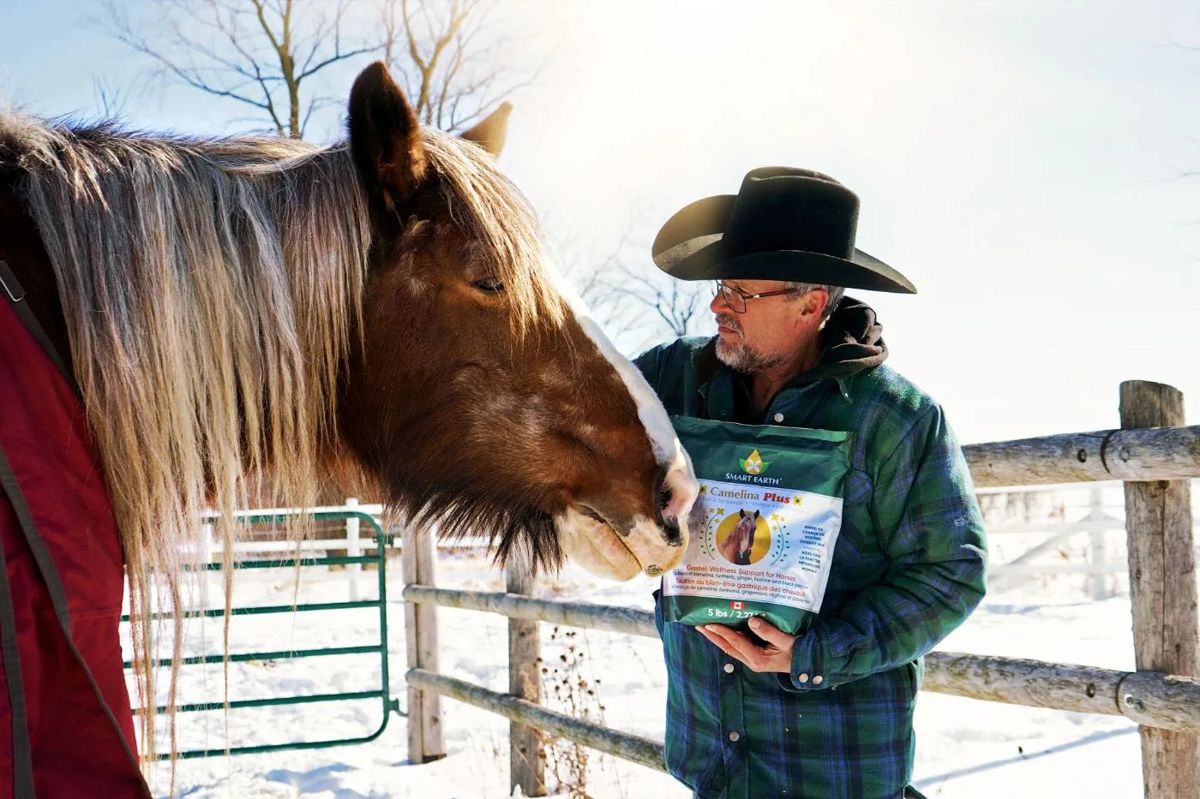
Cheryl Herauf-Heaman's quarter horse mare was four the first time she went cinchy. Cheryl had her saddle refitted, then paid for regular chiropractic and osteopath visits, and the mare still pulled back every time she was cinched. A scope finally found the ulcers.
Over the next nine years the mare had three stomach scopes and three full courses of GastroGard, with compounded omeprazole in between whenever a trailer ride was coming up. Each course helped for a while, and Cheryl was still at a loss for how to keep her comfortable.
Her story is a common one. Gastric ulcers are found in most horses in active work, and in a large share of horses that are only ridden for pleasure.
For a lot of those horses, treatment turns into a loop. The horse improves, the paste runs out, and a few weeks later you're watching for the same signs again.
Signs Owners Notice First
- Girthy or cinchy when tacked up
- Picky eating or a drop in appetite
- Loose manure or fecal water
- Losing weight or looking ribby
- Pinned ears, biting or a sour attitude
- Touchy about brushing or blanketing
- Cribbing or windsucking
- Resisting under saddle
A scope is how vets confirm ulcers, and if your horse hasn't had one, it's worth a conversation with your vet. Plenty of owners never scope, though, and go by what they see in the barn every day.
Why the Signs Come Back After Treatment
Omeprazole works by shutting down acid production in the stomach. When the course ends, the stomach tends to overcorrect. Vets call this rebound acid hypersecretion, and it affects roughly 90% of treated horses, so in the weeks after treatment the stomach is making more acid than it did before.
Meanwhile, nothing about the horse's week has changed. Jenna Tranter, the equine specialist we work with, puts it this way:
"A lot of performance horses spend maybe 20 hours of their day in a stall looking at four walls."
Jenna Tranter, equine specialist
Add training, hauling, shows and feed changes, and the conditions that caused the first round of ulcers are still there when the extra acid arrives. That's when the girthiness and the picky eating come back.
It's also where the money goes. A full prescription course runs $800 to $1,000 or more a month, and repeating it every time the signs return isn't realistic for most barns. Antacids neutralize acid for a few hours, and when they wear off the stomach is back where it started. Corn oil, a common add for weight, is mostly omega-6, which pushes inflammation the wrong way in a gut that's already irritated.
A Daily Feed Built by a Former Health Canada Drug Evaluator
Dr. Amanda Nascimento earned her DVM in Brazil and her PhD in immunology at the University of Saskatchewan, and she is board certified in veterinary toxicology. She then spent years at Health Canada reviewing the safety, efficacy and quality of the drugs vets prescribe to horses.
DVM, MSc, PhD, ABVT (American Board of Veterinary Toxicology)
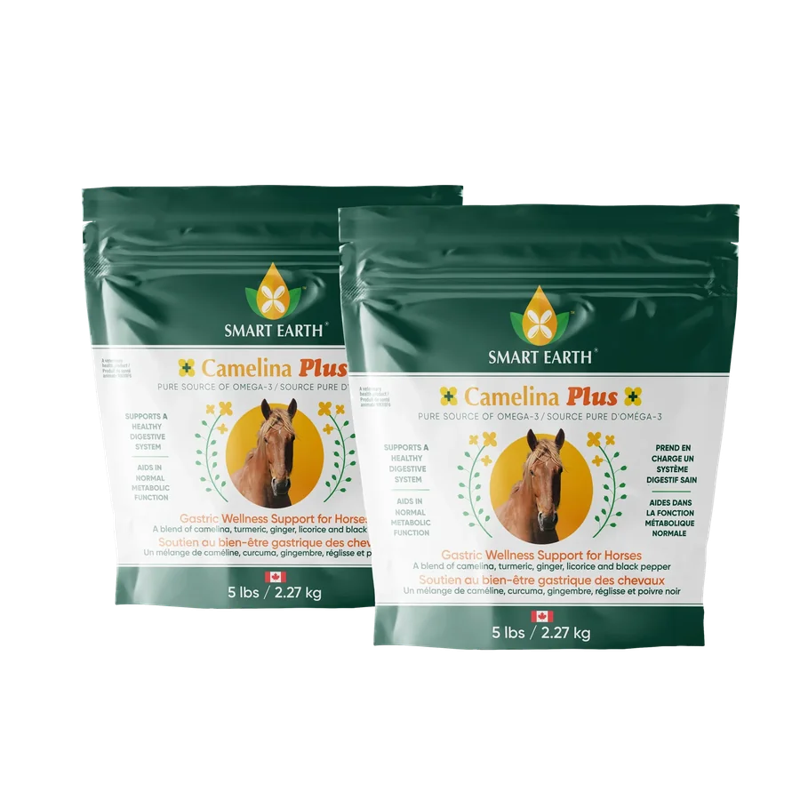
She built Camelina Plus for the horse between treatments: one that's prone to relapse, coming off omeprazole, or heading into a hard season of showing and hauling. She picked each ingredient against published research in horses and donkeys, and we put the finished formula through Health Canada's Veterinary Health Products program.
"My motivation came from recognizing unmet needs in existing equine products, particularly in the areas of immune function, inflammatory response, and gastrointestinal support."
Dr. Amanda Nascimento
What's in the Bag
- CamelinaGrown on the Canadian prairies and pressed in a Safe Quality Food (SQF) certified facility. It's the omega base, with more omega-3 than omega-6, which is the opposite of the corn and soybean oils in most feed rooms.
- Licorice rootSupports the stomach's natural mucus layer, the lining that protects it from its own acid.
- Turmeric and gingerSupport a normal inflammatory response in the gut.
- Black pepperContains piperine, which helps the horse absorb the turmeric instead of passing most of it straight through.
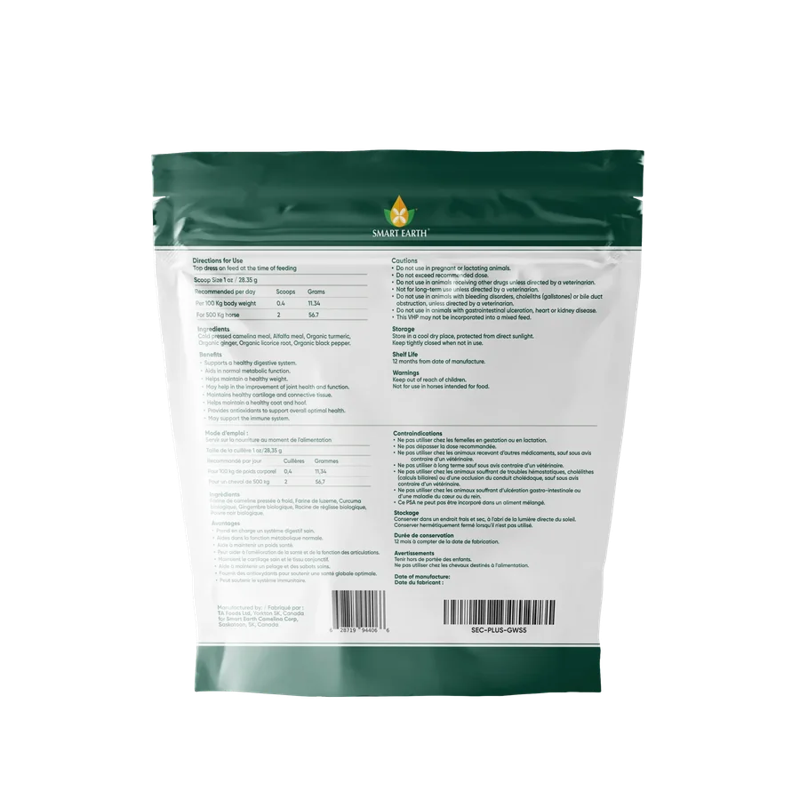
Camelina Plus isn't an antacid and doesn't shut acid production down. It supports the stomach's own defenses, which is why owners feed it every day instead of in courses.
The research behind each ingredient
Licorice. In a randomized study in donkeys, licorice extract significantly reduced NSAID-induced gastric ulcers within 7 days (Ahmadnejad et al., 2022).
Turmeric. A 28-day trial in horses found turmeric was well tolerated with no worsening of gastric ulcers (St. Blanc et al., 2022).
Ginger. Ginger changed inflammatory cytokine expression and improved post-exercise recovery in horses (Liburt et al., 2009).
Black pepper. Taking piperine with curcumin increased curcumin absorption about 20-fold (Shoba et al., 1998).
Cheryl's Mare Stood Still at the Trailer for the First Time in 9 Years
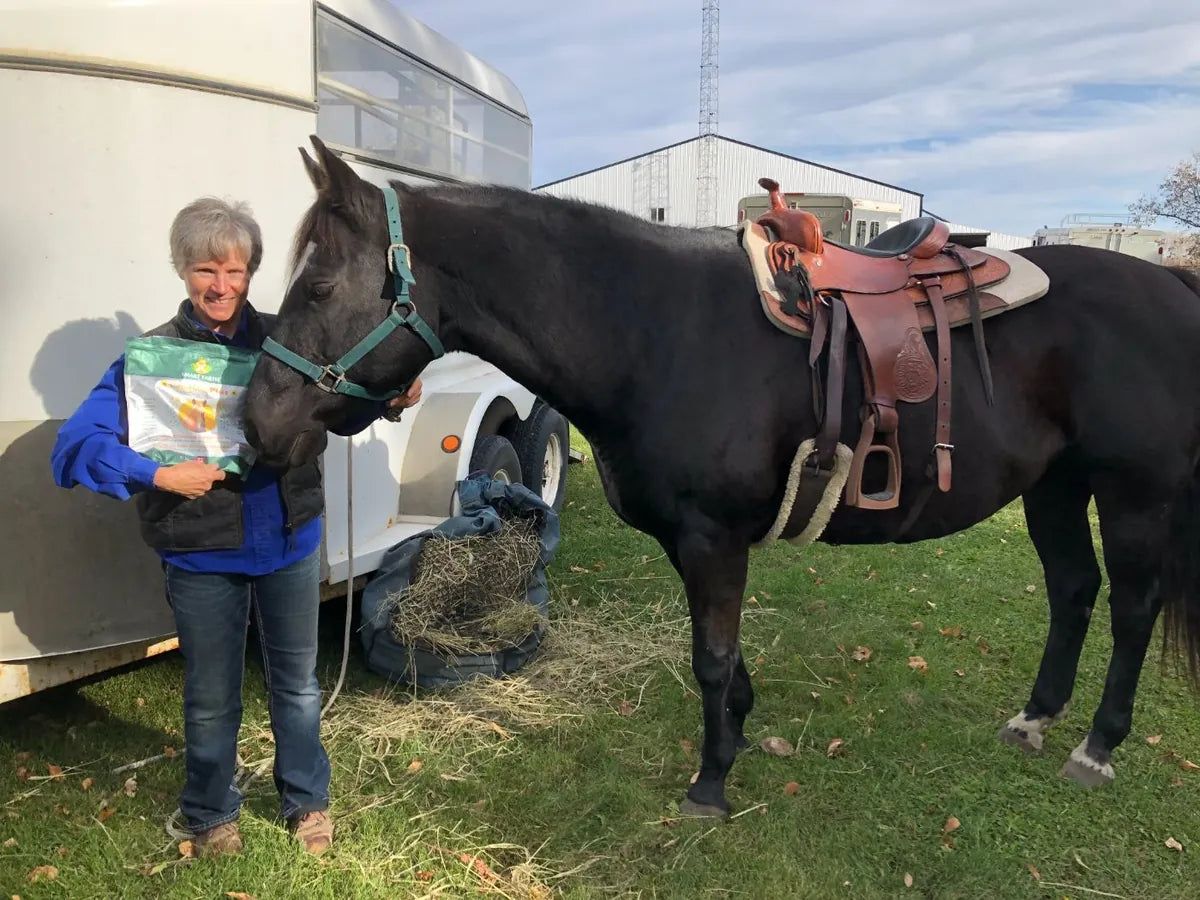
Cheryl saw a Facebook ad for Camelina Plus at the end of August and decided to try it. This is what she wrote to us:
"I started the product the end of August and waited for 5 weeks to see how she reacted when saddled. I rode her at home a few times with no issues then on Thanksgiving weekend we trailered a good hour from home and went on a nice long trail ride. For the first time in 9 years she did not even think about pulling back when I went to cinch her tied to the trailer! She just stood there waiting to be saddled!! I've since gone on a few more trail rides and she's fine, almost seems happy to be out on the trail!! THANK you for this phenomenal product. No more omeprazole for us!"
Cheryl Herauf-Heaman, Canada · 15-year-old quarter horse mare · Verified BuyerDay 0 and Day 30 From Our Field Trial
Before launch, we sent Camelina Plus to owners across North America whose horses had a history of ulcers, fecal water, weight loss or cribbing, and asked for photos on the first day and after 30 days.
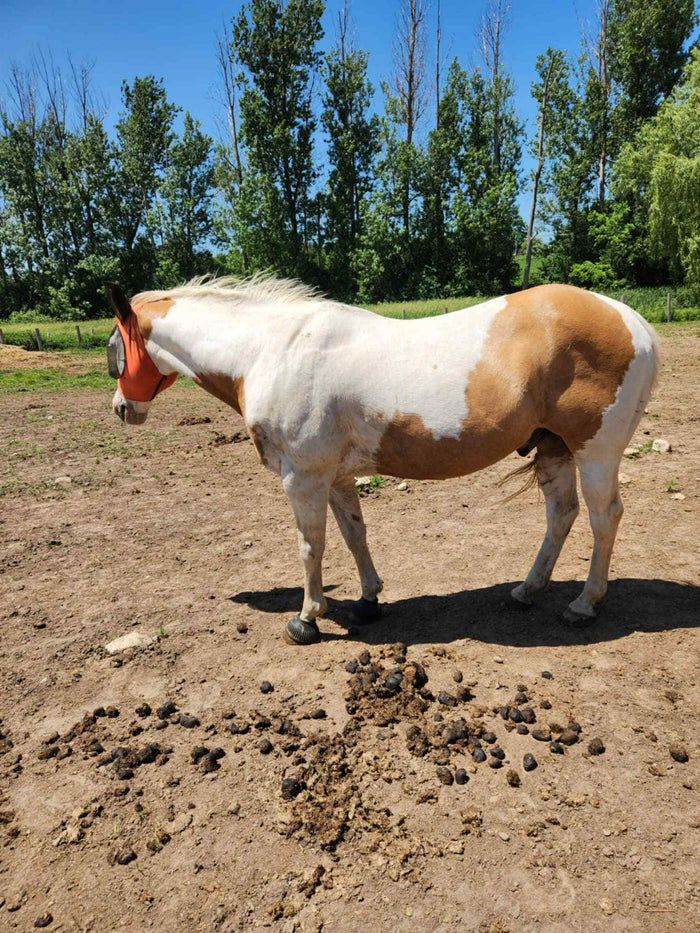
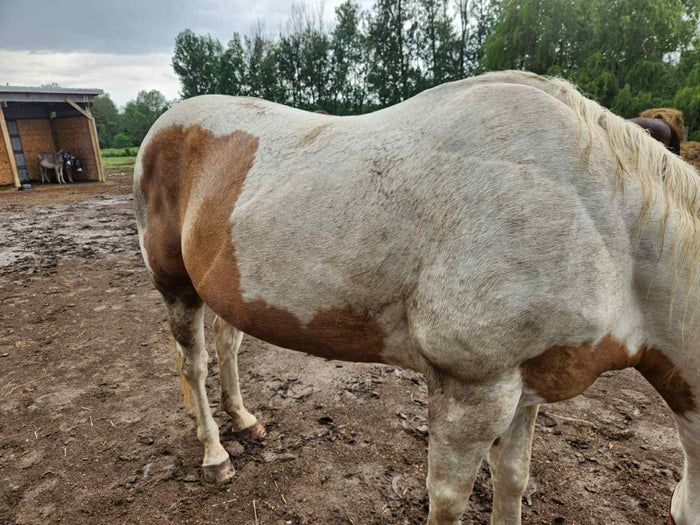
Within 30 days we had almost no recurrence of FWS and a very healthy weight.
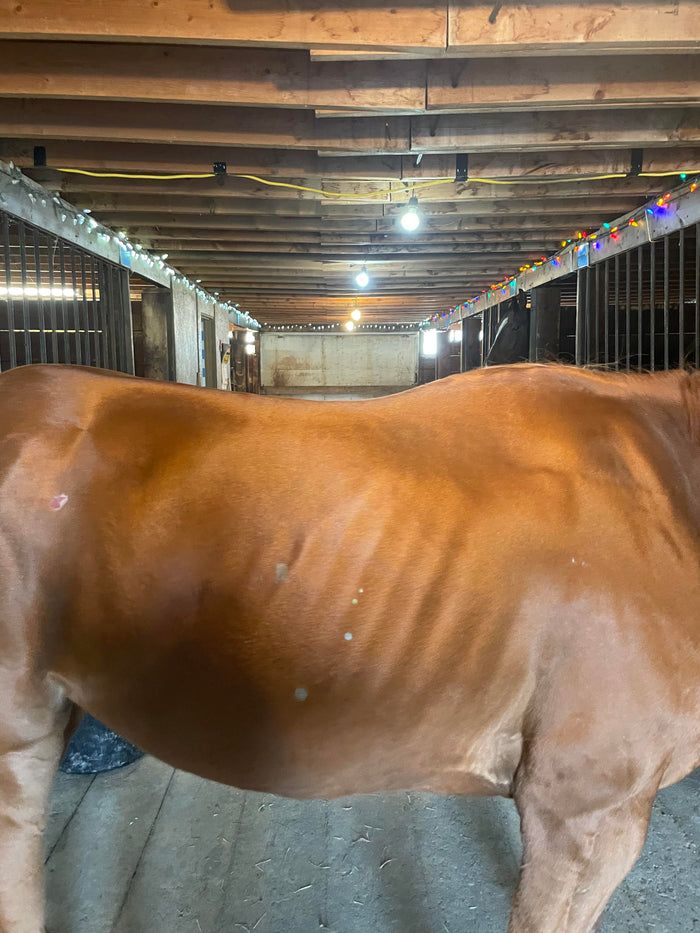
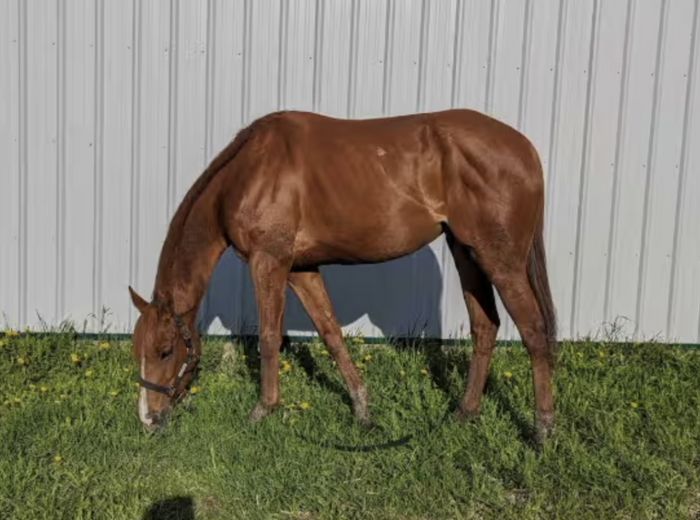
She's clearly walking proof of its effectiveness.
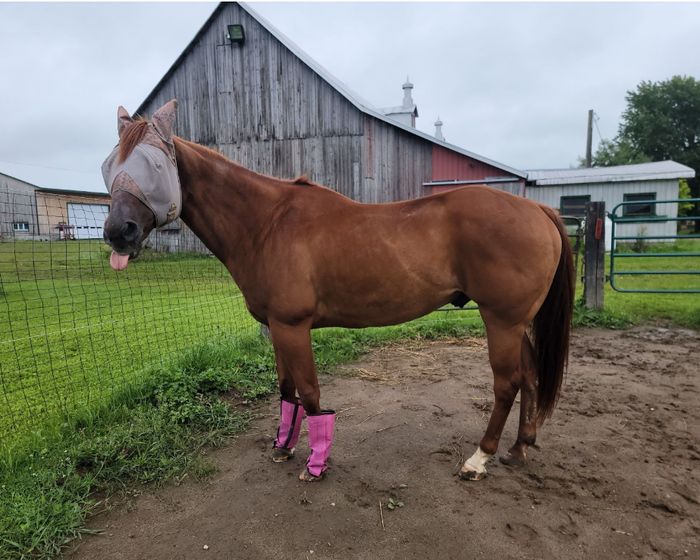
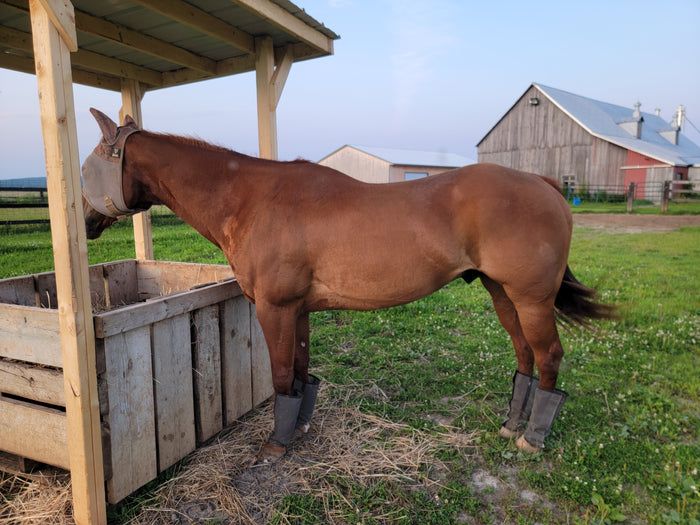
Major reduction in all of his symptoms including his burp tic. He no longer has to use a collar.
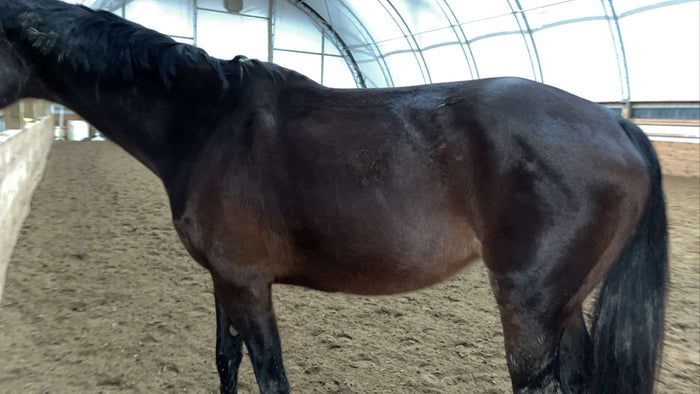
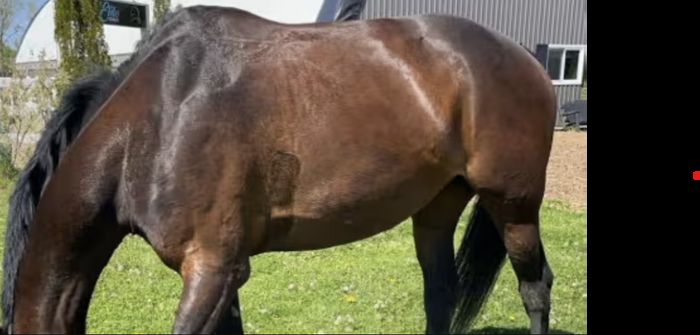
All ulcer symptoms had completely cleared up by Day 14.
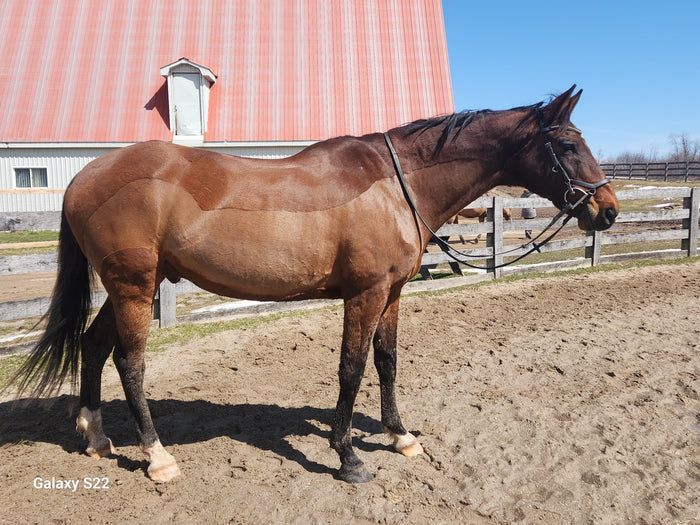
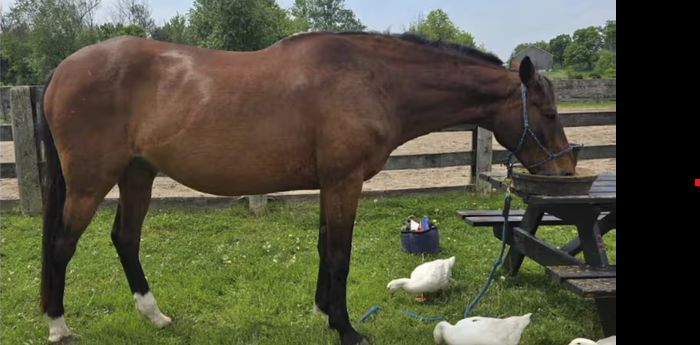
Ben gained over 40 kg in 4 weeks, averaging 10 kg a week. I have a scale, so the number is accurate.
When the trial ended and the product ran out, five of the ten horses slipped back within a few weeks: appetite dropped, weight came off, and the fecal water returned. When their owners restarted Camelina Plus, the improvements came back. That's why we sell it as a daily feed.
Verified Customer Reviews
"My gelding got ulcers through the winter that completely changed his personality. From a horse that would stand to be brushed all day turned into hating any grooming and resisting under saddle. After two rounds of Omeprazole he was relatively back to his normal self however his body condition became very poor. After seeing the Camelina Plus advertisement I thought it wouldn't hurt but never expected the results we got!"
"I treated her twice with omeprizole and then went to the scope, gastroguard and scope for results. It did its job, but again did not seem long lasting. The results have been fantastic!!! She is a very different horse, much happier, not constantly laying her ears back, not trying to bite every time we touch her. She actually leaned in and enjoyed scratches on her chest and belly!!!"
"He used to constantly kick at his belly as soon as I put the saddle on in anticipation of being cinched up, but now he NEVER does that!! I can cinch him without any issues like ear pinning and looking like he wants to bite me."
"My gelding has been treated for ulcers and they just keep returning shortly after his meds are stopped. His spookiness and reluctance to be worked with has improved greatly."
"I was worried that my horse wouldn't like it because he is a super picky eater, but he LOVES it. I don't even have to hide it in his feed."
What to Expect
- Weeks 1–2Most owners who write to us notice behavior first: less girthy, more interested in feed, easier to brush.
- Weeks 4–8Weight, topline and coat take longer. Give it a full four to eight weeks before you decide.
- After thatKeep feeding it daily, especially through showing, hauling and feed changes. Horses in our trial that came off it often slipped back.
Feed it at the dose on the label, and if you don't see a change, call or email us instead of doubling the scoop. Results can vary, and some horses, particularly those with fecal water, don't respond. That's what the 60-day guarantee is for.